⏱ How Short Practice Sessions Help Kids Learn Guitar Faster
Short practice sessions aren’t just easier for kids — they’re often more effective. Discover how 3–5 minutes of focused guitar practice can build confidence, motivation, and steady progress.

When parents imagine guitar practice, they often picture long, focused sessions — sitting still, concentrating hard, “putting in the work.”
But young children don’t learn that way.
What looks like a lack of focus or discipline is usually something much simpler:
👉 Mental fatigue
👉 Physical tiredness
👉 Overwhelm
The truth is, shorter practice sessions are not a compromise.
For kids, they’re a superpower.
⏱ Why Long Practice Backfires for Kids
Long practice sessions may seem like the “serious” way to learn, but for young beginners they often create the exact opposite of what we want.
Children’s attention spans are still developing. Their hands tire quickly. Their brains are processing an enormous amount of new information — finger placement, rhythm, coordination, sound.
After a surprisingly short time, fatigue sets in.
What follows is familiar to many parents:
❌ Fidgeting
❌ Distraction
❌ Silly mistakes
❌ Frustration
❌ Resistance
And suddenly, practice becomes associated with pressure rather than enjoyment.
Not because the child dislikes guitar…
…but because the experience became too long, too heavy, and too demanding.
💡 The Science Behind Short Practice
Young children learn best in small, focused bursts.
Their brains are wired for short cycles of attention, followed by rest, movement, or a change of activity. This isn’t poor discipline — it’s normal cognitive development.
Short practice sessions work because they:
✅ Match a child’s natural focus window
✅ Prevent mental overload
✅ Reduce physical fatigue
✅ Increase information retention
✅ Create frequent success experiences
In other words…
Children absorb more when their brains stay fresh and engaged.
Just a few minutes of clear, positive playing can build stronger neural connections than a long session filled with distraction and diminishing focus.
For kids, quality beats duration every time.
Consistency Beats Intensity
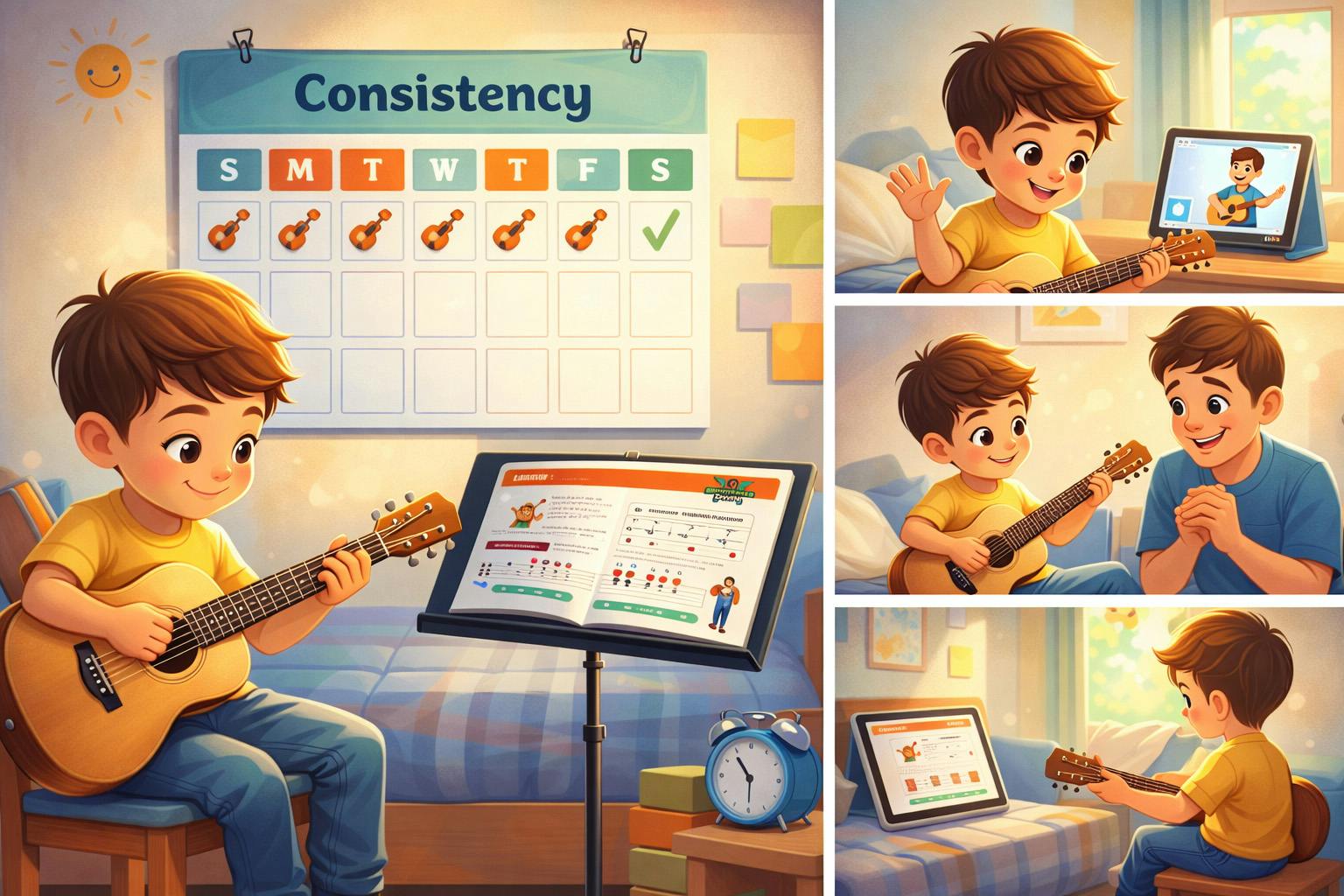
When it comes to children learning guitar, frequency matters far more than duration.
A few short, relaxed sessions across the day can be incredibly effective:
✅ 3–5 minutes in the afternoon
✅ Another 3–5 minutes after dinner
✅ Maybe a quick play before bed
These light-touch moments help:
🎸 Build finger strength gradually
🎸 Develop calluses comfortably
🎸 Prevent soreness overload
🎸 Keep practice feeling easy
This is especially important in the early stages, when kids often say:
👉 “My fingers feel sore”
That’s completely normal.
Daily, gentle exposure allows the hands to adapt naturally — far better than a single long weekend session that can lead to fatigue or discomfort.
What If Your Child Wants to Keep Playing?
That’s a wonderful sign.
If your child is enjoying practice and wants to continue:
✨ Let them.
There’s no need to shut down enthusiasm just to “stick to the schedule.” Motivation is precious — we want to protect it.
Think of structured practice as the minimum dose, not the maximum limit.
👨👩👧 A Simple Motivation Boost
One of the most powerful encouragement tools is beautifully simple:
👉 “Why don’t you show Dad what you played today?”
or
👉 “Can you give me a mini concert?”
✅ Children love sharing progress
✅ Performance creates purpose
✅ Purpose fuels motivation
How Kids Guitar Dojo Is Designed Around This Principle
Kids Guitar Dojo is built with one core understanding:
👉 Children learn best through short, positive, repeatable experiences.
Rather than expecting long practice sessions, the program encourages:
✅ Bite-sized lessons
✅ Clear, simple instructions
✅ Quick wins
✅ Frequent feelings of success
Each lesson is designed to feel achievable — helping children build confidence without overwhelm or frustration.
This approach naturally supports:
🎸 Consistency
🎸 Motivation
🎸 Skill development
🎸 A positive relationship with practice
Because when learning feels manageable and rewarding…
Children want to keep going.
✨ Final Thoughts
When children are learning guitar, progress doesn’t come from long, exhausting practice sessions.
It grows from something far more sustainable:
🌱 Short sessions
🌱 Positive experiences
🌱 Regular contact with the instrument
By keeping practice brief, light, and encouraging, you help your child build:
🎸 Confidence
🎸 Enjoyment
🎸 Consistency
And those three ingredients are where real, lasting progress lives.
Because when guitar feels good to play…
Kids keep coming back.

Fastest Way For Kids To Learn Guitar