Guitar Sizes for Kids Explained (Quick Guide for Parents)
Choosing the right guitar size helps children learn comfortably and enjoy playing from the start. This quick guide explains common kids guitar sizes, when each size is used, and how parents can check if a guitar fits properly.

Guitars come in several different sizes designed for children. Choosing the right size helps young beginners hold the instrument comfortably and reach the frets without struggling.
If a guitar is too large, kids may find it difficult to press the strings or balance the instrument properly. When the guitar fits well, learning becomes much easier and more enjoyable.
Most beginner guitars for children come in four common sizes:
• 1/4 size – small beginners
• 1/2 size – young learners
• 3/4 size – growing players
• Full size (4/4) – older kids and teens
👉 If you're unsure about sizing overall, see our full guide:
What’s the Best Guitar Size for Kids?
📊 Quick Guitar Size Chart for Kids
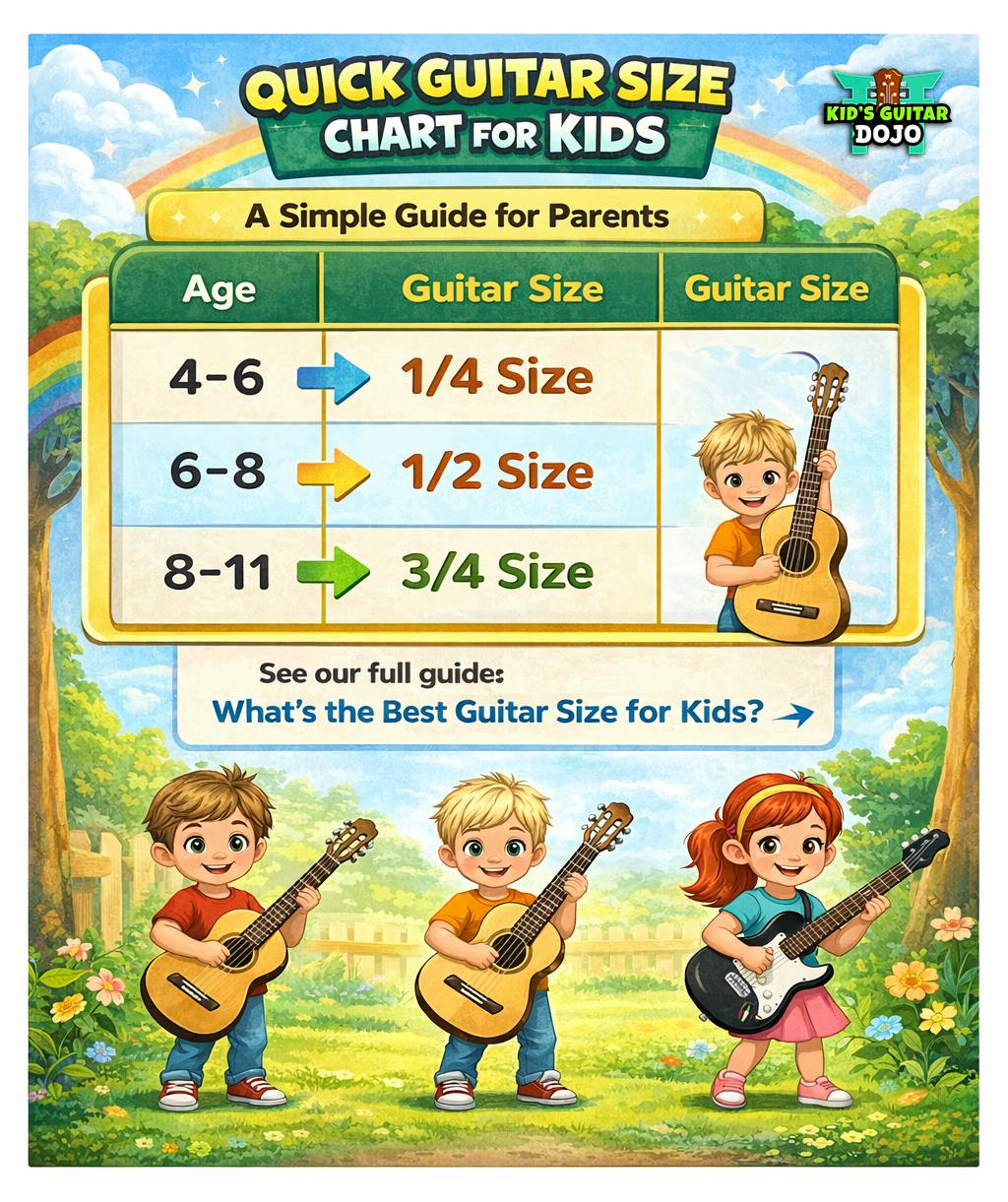
This quick chart shows the most common starting points for children:
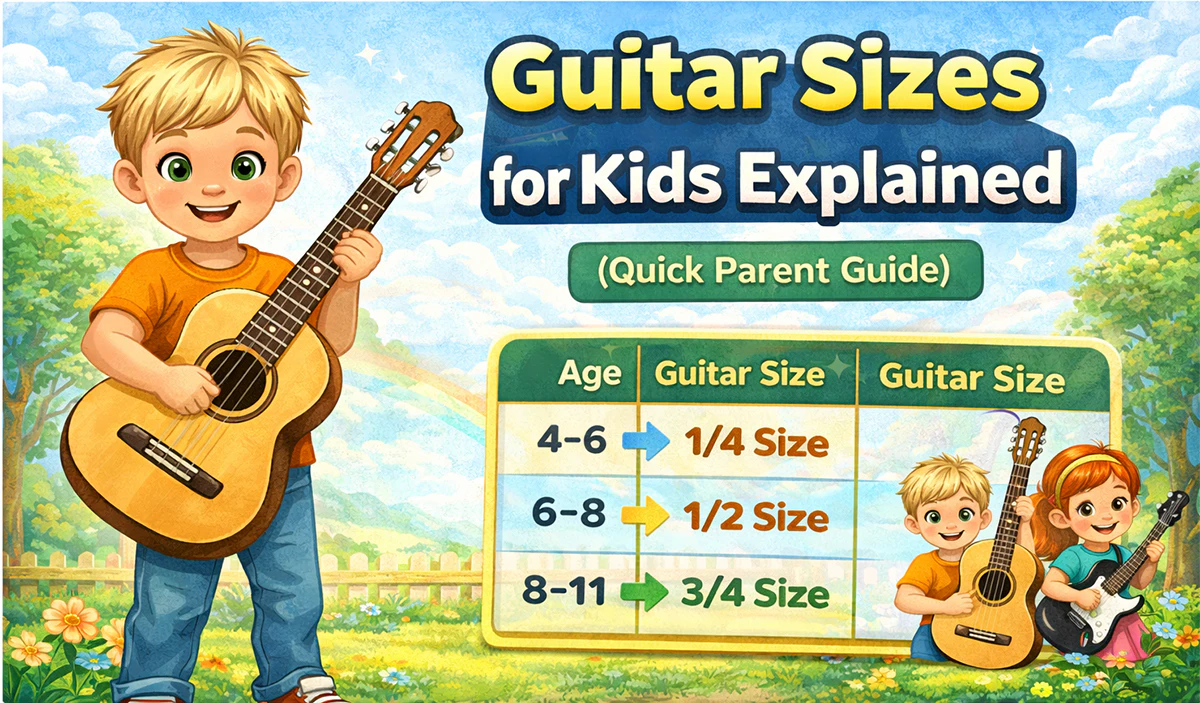
Age 4–6 → 1/4 size guitar — see our guide: What Size Guitar for a 5 Year Old?
Age 6–8 → 1/2 size guitar — see our guide: What Size Guitar for a 6 Year Old?
Age 8–11 → 3/4 size guitar — see our guide: What Size Guitar for an 8 Year Old?
These age ranges are general guidelines. The child’s height, arm length, and comfort matter more than age alone.
📏 Understanding the Different Guitar Sizes
1/4 Size Guitar
Best for very young beginners.
These guitars are small and lightweight, making them easier for children with small hands to hold and control.
Typical age range: 4–6 years
1/2 Size Guitar
A common size for young beginners who have outgrown smaller guitars.
The slightly longer neck gives more room for finger placement while still being comfortable for smaller arms.
Typical age range: 6–8 years
3/4 Size Guitar
This size works well for older children who are still growing.
3/4 guitars provide more fretboard space while remaining easier to hold than a full-size instrument.
Typical age range: 8–11 years
Full Size (4/4) Guitar
Full-size guitars are generally best for teenagers or taller children.
Younger beginners may struggle with the larger body and longer neck.
Typical age range: 12+ years
⚡ Acoustic or Electric Guitar for Kids?
Both acoustic and electric guitars can work well for beginners.
Acoustic guitars
✔ Simple setup
✔ No amplifier required
✔ Traditional sound
⚠ Steel strings can feel stiff for small fingers.
Electric guitars
✔ Thinner necks
✔ Softer strings
✔ Often easier to press notes cleanly
⚠ Requires an amplifier.
Many young beginners start with nylon-string acoustic guitars, which are softer on small fingers.
Once you know the right size guitar, you may also want to see our guide to trusted beginner models:
Best Beginner Guitars for Kids by Size
Still deciding between the two? Read our full Electric vs. Acoustic Guitar for Kids guide for a side-by-side comparison of comfort, strings, noise and beginner setup.
👍 How to Check if a Guitar Fits Your Child
A properly sized guitar should feel comfortable when your child sits with it.
Check that:
✔ The guitar rests comfortably on their lap
✔ Their fretting hand reaches the first few frets easily
✔ Their strumming arm rests naturally over the body
✔ They are not stretching or hunching forward
If the guitar feels too big or difficult to hold, moving down one size usually helps.
👨👩👧 Age Guides for Choosing the Right Guitar
If you're choosing a guitar for a specific age, these guides explain the best size in more detail:
• What Size Guitar for a 5 Year Old?
• What Size Guitar for a 6 Year Old?
• What Size Guitar for a 7 Year Old?
• What Size Guitar for an 8 Year Old?
Each guide explains the typical size, fit tips, and beginner advice for that age.
🎵 Why the Right Guitar Size Matters
When a guitar fits properly, children can:
🎵 press the strings more easily
🎵 reach chords comfortably
🎵 focus on learning music instead of fighting the instrument
A well-sized guitar builds confidence and motivation, helping beginners enjoy practicing from the start.
Frequently Asked Questions