🎸 The Dojo Code: 7 Smart Tips for Kids and Parents to Master Guitar
A parent-friendly guide to the Dojo Code — 7 simple practice rules that help kids learn guitar with confidence, reduce frustration, and make steady progress (without needing musical knowledge).

📅 Updated February 2, 2026
The Dojo Code is a simple, proven framework we use at Kids Guitar Dojo to help beginners learn guitar without frustration. 🎸
It’s designed especially for:
- Kids who are just starting out
- Parents who want to help — even if they’ve never played guitar themselves
Instead of long, exhausting practice sessions, the Dojo Code focuses on small wins, consistency, and confidence.
These 7 smart tips help kids (and parents):
- ✅ Build good habits from day one
- ✅ Stay motivated and avoid overwhelm
- ✅ Make real progress with short, focused practice
Parents don’t need musical knowledge — just encouragement and a simple routine.
This guide walks you through each part of the Dojo Code so you can support your child’s learning the right way, from the very first lesson.
⏰ Why Smart Practice Matters
Why Smart Practice Matters
Consistency beats intensity every time.
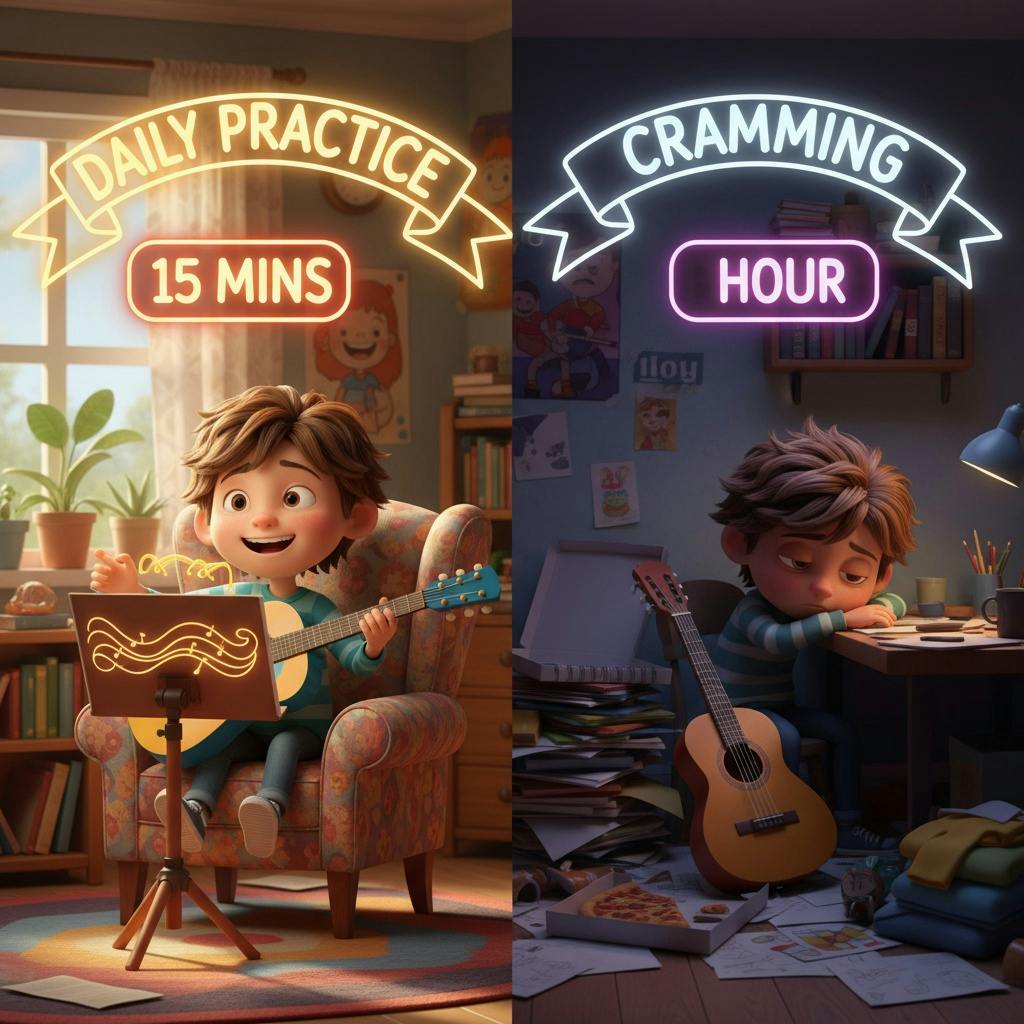
The first rule of the Dojo is simple: Fifteen minutes a day keeps frustration away.
Instead of long, infrequent sessions, short daily practice builds muscle memory
and keeps motivation high.
Keep your guitar out where you can see it — not hidden in its case.
Start each session with a quick warm-up or one-string drill.
⭐ Quick Start: How to use this guide
If you’re short on time, read Tip #1 and Tip #2 first — they create the biggest “early win” for most kids.
Then come back and use the rest as a checklist whenever practice starts to feel wobbly.
🎯 The 7 Dojo Code tips (at a glance)
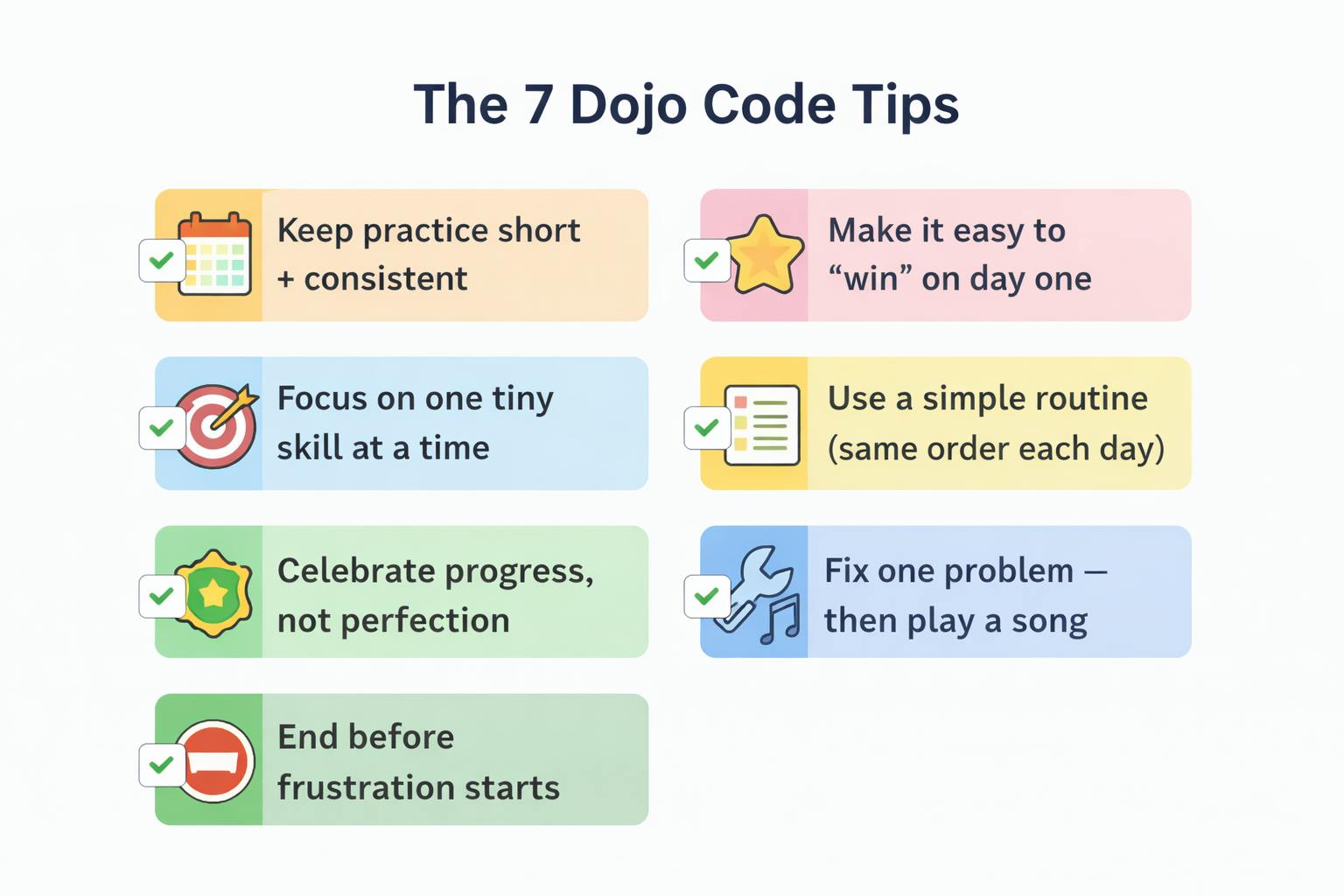
- Keep practice short + consistent
- Make it easy to “win” on day one
- Focus on one tiny skill at a time
- Use a simple routine (same order each day)
- Celebrate progress, not perfection
- Fix one problem — then play a song
- End before frustration starts
🤟 The 3-Finger, 3-Fret Rule
For beginners, mastering the basics is key.
THE LEFT HAND
The 3-Finger, 3-Fret Rule means using only your first three fingers, with each finger covering one fret. This area of the neck is where we spend most of our time and using these fingers is the most efficient way to play. These 3 finger also have the most strength with the first finger having the most pressing down power.
Using these 3 fingers across the first 3 frets helps build clean technique and stops fingers from chasing each other around the neck.
Keep your thumb behind the neck for balance.
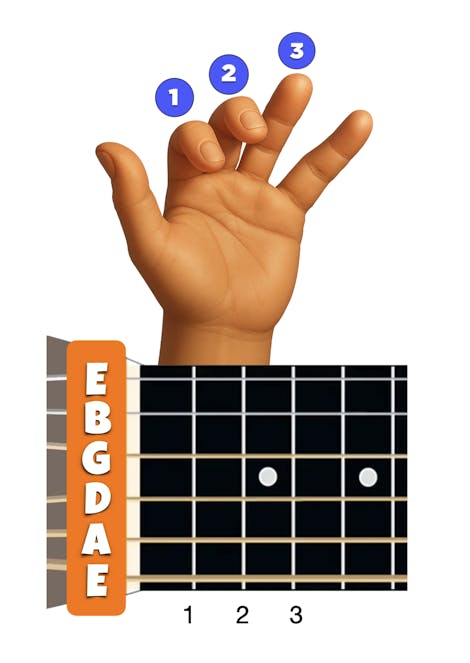
👀 Parents, remind your child to keep their fingers curved and use all 3 fingers across the first 3 frets. Many kids will try and use their 1st finger to play every note.
🐾 The Cat’s Claw: Fingertip Power!
Imagine your hand is a cat’s claw! 🐱
Use the very tips of your fingers to press the strings — not the flats
This creates a clear, strong sound and builds hand strength.
Curve your fingers like you’re holding a tiny ball. Keep your thumb relaxed in the middle of the back of the neck.
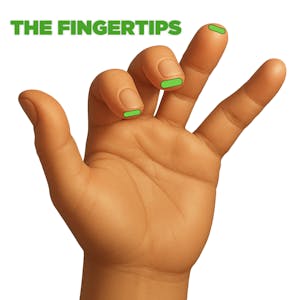
✨ Parents, if it looks like a little cat paw, they’re doing it right!
👁 The Rule of the Eyes (Focus One Thing at a Time)
Great players know: your eyes can only be in one place at a time.
Start by training the right hand or picking hand — pick open strings until it feels automatic.
THE RIGHT HAND
- Sit upright, guitar stable, pick held not to tight
- Target zone for your eyes: the nut area of the guitar (where the strings meet the headstock).
You’re going to aim at strings by looking toward the nut, not by staring at your picking hand. - We’ll use the top 3 strings (high E, B, G). See the TAB
Open-string autopilot (eyes stay at the nut)
- Look at the nut, line up your vision with the high E string
- Never glance at your picking hand. If you miss, reset and try again—still looking at the nut.
- 3. Do 10 clean reps per string.
Goal: Your right hand finds strings by feel while your eyes stay calm near the nut
🚗 It’s just like learning to drive — one thing at a time until it’s smooth!
🐢 Slow First, Fast Later
- Start slow so your fingers and hands stay relaxed.
- Speed will come naturally once everything feels easy and controlled.
- Speed is fun, but control comes first.
- Always play new tunes slowly before adding the backing track.
Check every note and rhythm. Once it sounds clean, then hit play and join the band!
🎶 Parents, if you hear mistakes, slow it down and celebrate the small wins.

🏆 Fast is earned, not rushed.
📖 The Reading Challenge
Reading music is like learning a new language — it takes time, and that’s normal.
After completing Book 1, kids can move into Book 2, where reading notes becomes part of the journey.
A simple trick that really helps:
✏️ Write note names lightly in pencil, then erase and test again.
Inside the members area, you’ll also find printable resources like games, colouring pages, and the Write the Notes workbook — designed to turn reading into a fun memory game.
🎵 Writing + playing together builds real music confidence.
Parents, quiz your young musician: “What’s this note?”
🧠 This turns reading into a fun memory game — writing and playing = real music power!
💖 Parents Help Make the Magic Happen
Kids Guitar Dojo works best when learning continues at home.
Kids thrive when you:
🎉 Listen
🎸 Encourage
🌟 Celebrate effort — not perfection
Small things make a big difference:
🏅 Display certificates where kids can see them
🎁 Use Dojo Points or small rewards to keep practice fun
Remember — a weekly lesson is just the spark.
🔥 Your support at home keeps the music growing.
Be the coach, not the critic — and together, you’ll make music magic.
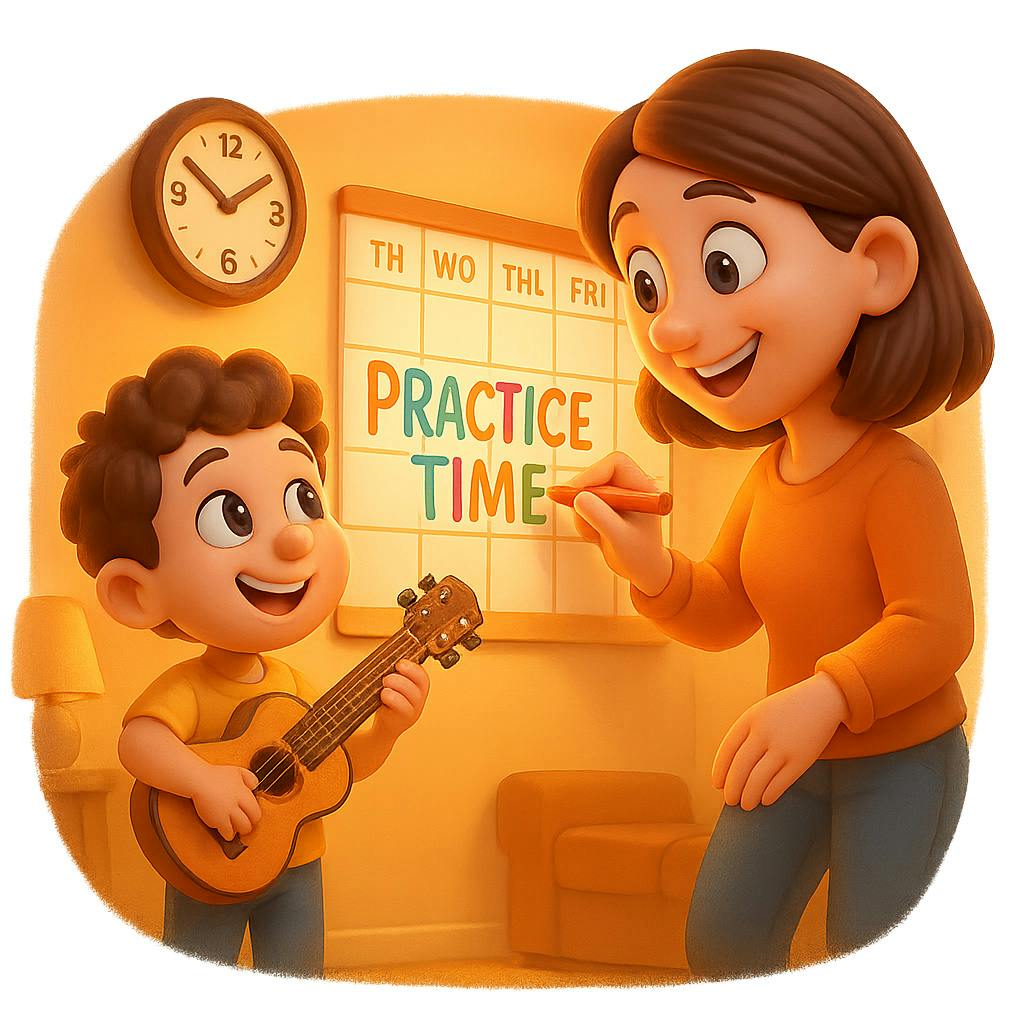
Be the coach, not the critic — and together, we’ll make music magic!
🎥 Using The Course Videos
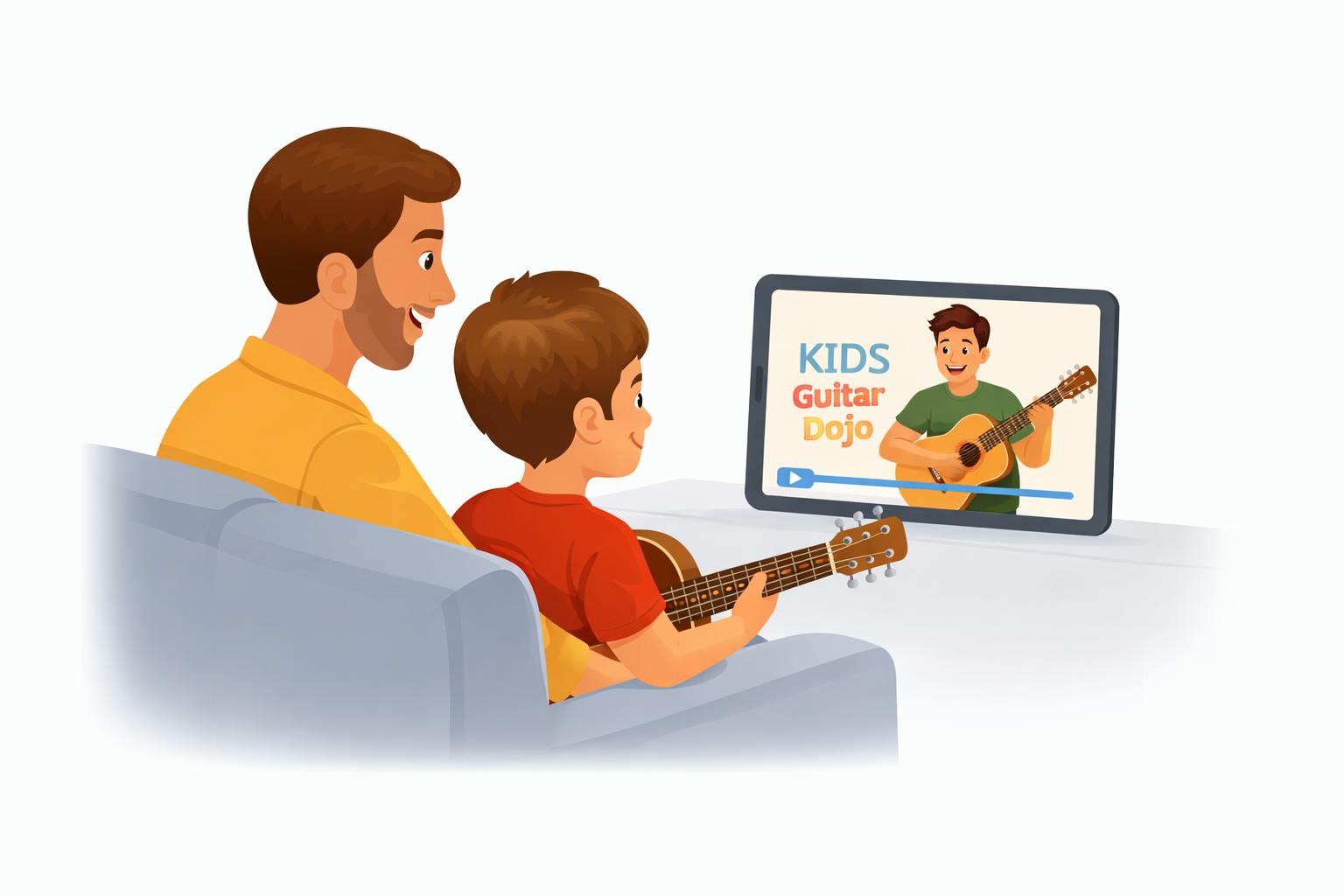
✅ Watch each video tip with your child
✅ Practice the technique together
✅ Use the catchphrases as reminders during home practice
✅ Celebrate progress with small rewards